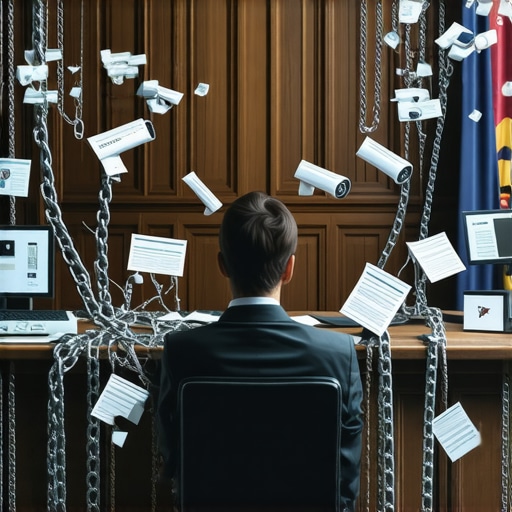
The brutal reality of algorithmic asset hunting
I watched a client lose their entire claim in the first ten minutes of a deposition because they ignored one simple rule about silence. They thought they were smarter than the software. They weren’t. By 2026, the traditional paper trail is a relic of a slower era. Today, your digital shadow tells the story of your wealth more accurately than your tax returns. If you think your offshore accounts or crypto wallets are invisible, you are already losing the litigation war. The opposition is using machine learning to parse every transaction you have made in the last decade. They are not looking for the money. They are looking for the patterns that lead to the money. This is not about truth anymore. It is about data points and the tactical application of civil procedure to freeze your life until you surrender. Most family law practitioners are still living in 2015. They do not understand that the discovery process has been weaponized by automated forensic tools. You are not just fighting your spouse. You are fighting an engine designed to find every cent you ever tried to hide. The coffee in my mug is cold because I spend my nights deconstructing the metadata of ‘deleted’ spreadsheets. If you want to survive a high stakes divorce in this climate, you need to stop thinking like a victim and start thinking like a strategist. Your exposure is total unless you understand the procedural leverage required to shut down algorithmic overreach. It is time to look at the law as it actually functions in the courtroom, not how it appears in a brochure.
The algorithmic trap in modern asset discovery
Predictive financial modeling and AI-driven forensic accounting are the primary tools used by opposing counsel to track hidden assets. By 2026, machine learning algorithms analyze historical spending patterns to flag offshore accounts and digital currency transfers that human auditors often overlook. These tools do not sleep. They do not get tired. They cross-reference your Instagram geotags with your credit card pings to find the gaps in your story. If you claimed you were in Chicago but your phone’s metadata shows a ping from a bank in Zurich, the AI will find it. Litigation in 2026 is a forensic autopsy of your digital existence. You cannot hide behind complex shell companies when the software can trace the beneficial ownership through a thousand layers of automation. The law moves slowly, but the technology moves at the speed of light. You must be prepared to challenge the very foundations of how this data is collected. If the defense cannot prove the chain of custody for the digital evidence, the evidence dies. That is where the fight happens. It happens in the motions to quash and the protective orders that your current lawyer is probably too afraid to file. We do not ask for permission in this firm. We take the territory and wait for the judge to tell us to move. Usually, they don’t. Because we know the rules better than the people who wrote them.
“Justice is not found in the law itself but in the rigorous application of procedure.” – Common Law Maxim
Digital footprints and the myth of encrypted privacy
Encrypted messaging apps like Signal or Telegram no longer provide absolute protection against discovery motions targeting metadata and backup files. Courts now compel the production of hardware keys and biometric access to decrypt local storage containing financial communications and hidden ledger entries. You think an encrypted chat is a vault. It is actually a map. Even if the content is scrambled, the timing, frequency, and location of those messages create a forensic signature that is admissible in most jurisdictions. We see it every day. A spouse claims they have no contact with a foreign entity, yet their Signal metadata shows 400 bursts of data to a server in the Cayman Islands. That is enough for a judge to grant a broad discovery order that will tear your financial life apart. You need to understand that the legal services industry is currently being overhauled by AI agents that can draft a thousand subpoenas in the time it takes you to read this paragraph. The volume of litigation is increasing because the cost of finding the ‘smoking gun’ has dropped to near zero. If you are not using counter-surveillance legal tactics, you are a sitting duck. The goal is to create enough procedural friction to make the cost of discovery higher than the potential settlement value. It is a game of attrition. We make them fight for every kilobyte of data. We challenge every warrant. We make the litigation so expensive and so slow that the opposition loses their appetite for the hunt. That is how you win in 2026.
Litigation strategies to counter automated audit trails
Counter-surveillance legal tactics involve filing motions for protective orders to limit the scope of AI data mining. Lawyers must challenge the admissibility of algorithmic evidence by demanding the “black box” logic behind the software be disclosed under Daubert standards during pre-trial hearings. If the software used to ‘find’ your assets is proprietary, we demand to see the code. We argue that without transparency, the evidence is hearsay or worse, a violation of due process. This is the new frontier of litigation. You do not beat the AI by being faster. You beat it by making it legally toxic. When we get a report from a forensic AI tool, we do not just look at the numbers. We look at the methodology. We find the bias in the algorithm. We find the errors in the data scraping. We turn the technology against the person using it. Most lawyers are intimidated by tech. I find it predictable. Code has rules. Law has rules. When you master both, you become untouchable. We also use the timing of the litigation to our advantage. The strategic play is often the delayed demand letter. We let the defendant’s insurance clock or their own legal fees run out while we tie up their discovery motions in procedural knots. It is a cold, clinical process. We do not care about the drama of the divorce. We care about the ROI of the case. If the bleed is too high for the other side, they will fold. They always fold when the money stops making sense.
“The integrity of the judicial process depends upon the absolute adherence to the rules of evidence and the protection of the record.” – ABA Model Rules of Professional Conduct
Immigration status as a leverage point in asset wars
EB-5 investor visas and foreign asset reporting requirements are frequently weaponized in high-net-worth divorces. When one spouse holds a conditional green card, the threat of reporting financial irregularities to USCIS or the IRS creates immense pressure during settlement negotiations. This is the dark side of family law that no one wants to talk about. If your assets are tied to your status in this country, you are vulnerable. An AI audit that reveals an undisclosed foreign bank account doesn’t just mean a bigger settlement for your ex. It could mean a visit from federal agents. We use this as a defensive shield. We ensure that all financial disclosures are framed in a way that protects your immigration standing while still satisfying the court’s requirements. It is a delicate balance. One wrong word in a deposition can trigger a chain reaction that ends in deportation or asset forfeiture. This is why you cannot hire a generalist. You need a litigation architect who understands how family law, immigration law, and tax law intersect in the digital age. We look for the traps before you walk into them. We map out every potential vulnerability. We know that the threat of a report is often more powerful than the report itself. It is about leverage. It is about knowing which buttons to push to make the other side back off. In the world of high stakes litigation, peace is only achieved through the credible threat of total destruction.
Why your cloud storage is a deposition landmine
Cloud-based synchronization creates a permanent trail of financial documents that AI tools can reconstruct even after deletion. Forensic data recovery experts use MD5 hash matching to prove the existence of documents that were moved or altered to hide marital assets from the court. You think that clicking ‘delete’ on your Google Drive solves the problem. It doesn’t. It just creates a metadata event that says ‘I am hiding something.’ In 2026, the absence of data is just as suspicious as the data itself. If your cloud account shows a massive deletion event three days after you were served with divorce papers, you have already committed a discovery violation. The judge will hit you with an adverse inference instruction. That means the jury is told to assume that whatever you deleted was proof of your guilt. You cannot win a case with an adverse inference hanging over your head. You need a proactive data management strategy before the litigation even starts. We advise clients on how to legally and ethically manage their digital footprint within the bounds of the law. This is not about destruction of evidence. It is about data hygiene. It is about understanding that in a world where everything is recorded, the only way to stay private is to be intentional. We analyze your digital life with the same intensity as the forensic bots. We find the red flags before the opposition does. We prepare you for the questions they haven’t even thought to ask yet. That is the difference between a lawyer and a strategist. One reacts. The other controls the environment. We control the environment.