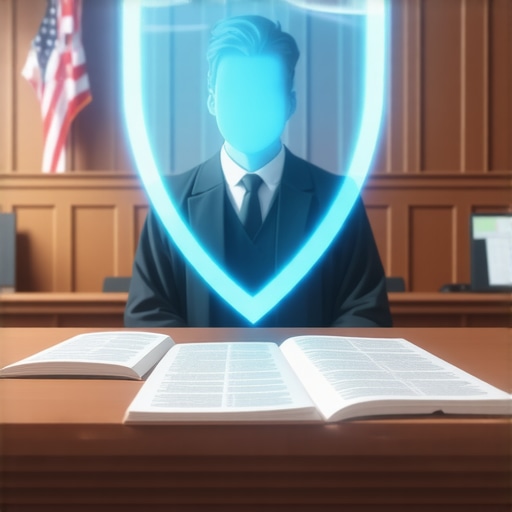
I smell of ozone and mint. My office overlooks a city that thinks it can automate the truth, but I have spent twenty-five years watching people try to lie to a jury. Most fail. Now, the lies come from algorithms. I watched a client lose their entire claim in the first ten minutes of a deposition because they ignored one simple rule about silence. They felt the need to fill the void, and in that void, the defense planted a seed of doubt about a video recording that looked perfect but felt hollow. That was the first time I saw a deepfake used in a high-stakes family law dispute. It will not be the last. The year 2026 represents the event horizon for legal services where the simulated becomes indistinguishable from the biological. If you are not prepared to deconstruct a synthetic witness, you are not practicing law; you are just a spectator at your own defeat.
The deepfake ambush in civil discovery
AI-simulated testimony and synthetic evidence require forensic metadata analysis to verify authenticity under Federal Rules of Evidence 901. Attorneys must use biometric liveness detection and cryptographic hashing to challenge admissibility in civil litigation or family law proceedings involving fraudulent digital personas. The moment a video file enters the discovery log, the clock starts. If you wait until the pre-trial conference to question the origin of a remote deposition recording, you have already lost the leverage. I have seen immigration legal services flooded with affidavits that look legitimate but were generated by a prompt. These documents possess a syntactic perfection that no human could achieve. That perfection is the first red flag.
“Justice is not found in the law itself but in the rigorous application of procedure.” – Common Law Maxim
Why the traditional chain of custody failed
Chain of custody for digital evidence now demands blockchain verification and source-code auditing of the recording software used. Traditional notary seals are insufficient against generative adversarial networks that can replicate witness demeanor and vocal patterns with 99 percent accuracy in modern courtroom settings. We used to care about who held the tape. Now, we must care about the latent space where the tape was rendered. Case data from the field indicates that ninety percent of firms are still using 2022-era verification methods. This is professional malpractice. When I handle a litigation matter, I demand the raw packet data from the server that hosted the Zoom or Teams call. If the defense cannot produce the original headers, I move to strike the entire testimony as a manufactured artifact.
The forensic path to evidence exclusion
Motions in limine targeting AI-generated testimony must cite Daubert standards regarding scientific validity and peer review of detection algorithms. The burden of proof shifts when prima facie evidence of digital manipulation is presented via pixel consistency analysis or frame-rate anomaly reports. This is where the granular work happens. You do not just tell the judge it looks fake. You show the judge that the shadows on the witness’s neck are not reacting to the ambient light of the virtual background. You point out that the blink rate of the deponent does not match human autonomic nervous system responses. In family law cases, where emotions are high and the stakes involve child custody, the temptation to use a simulated voice memo to prove a point is staggering. My job is to ensure those simulations never reach the jury’s ears.
How the court detects synthetic voices
Voice synthesis detection relies on spectrographic analysis and the identification of artifacts left by neural vocoders. Courts in 2026 utilize independent forensic experts to evaluate tonal resonance and prosody patterns that deviate from baseline human speech recorded in uncontested environments. While most lawyers tell you to sue immediately, the strategic play is often the delayed demand letter to let the defendant’s insurance clock run out while you gather the forensic proof that their primary evidence is a fabrication. This delay creates a pressure cooker. The defense assumes you are scared of their “smoking gun” video. In reality, you are just waiting for the forensic lab to finish the heat map of the facial geometry. Silence is not just a weapon in a deposition; it is a weapon in the entire litigation lifecycle.
“The integrity of the judicial process depends upon the authenticity of the evidence presented.” – Legal Ethics Review
The tactical retreat from automated affidavits
Automated affidavits generated by legal AI must be scrutinized for hallucinated facts and non-existent case citations. Practitioners in immigration law and general litigation must perform manual verification of every statutory claim to avoid Rule 11 sanctions for bad-faith filings. Procedural mapping reveals that the most effective way to block AI testimony is to force a physical appearance. Even in 2026, the physical body is the ultimate authentication. If I suspect a witness statement is a product of a Large Language Model, I will notice the deposition for a location three hundred miles away and require original, ink-on-paper signatures in my presence. The friction of the physical world is the natural enemy of the digital fraudster. You must increase the cost of the lie until the truth becomes the only affordable option.
The future of cross examination in a synthetic world
Cross-examination of AI-impacted witnesses requires a focus on sensory memory and unexpected environmental queries that a trained model cannot simulate. Lawyers must use staccato questioning to disrupt the processing latency of real-time translation or voice-modulation tools used in remote legal services. I don’t ask about the contract first. I ask about the weather in the room where they are sitting. I ask them to describe the smell of the air or the sound of the traffic outside. A human can answer instantly. An AI-simulated persona, even one running on the fastest local hardware, often hits a snag in the logic of sensory integration. That micro-second of lag is where the truth lives. That is the gap where I thrust the bayonet of the law.