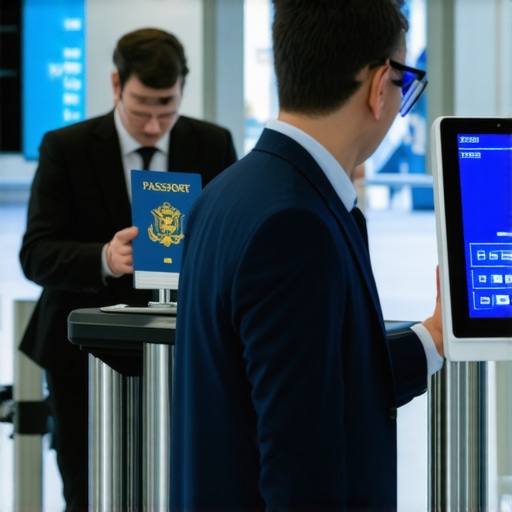
The shadow on your digital profile
I smell strong black coffee and the stench of a failing case before you even sit down. You think your visa interview is a conversation. It is not. It is a forensic audit where you are the primary suspect. I watched a client lose a decade of progress in the first five minutes of a consulate screening because they ignored one simple rule about silence. They tried to explain away a biometric mismatch that the machine had already flagged as fraud. They talked when they should have demanded a technical audit. This is the 2026 reality. The software has already decided if you are a liar based on a pixelated image from five years ago. If you walk into that room without a litigation strategy for your own face, you have already lost. This is not about being a good person. This is about data hygiene and the brutal application of administrative law. Your identity is no longer yours; it is a collection of vectors and nodes stored in a federal database that does not forgive mistakes.
The biometric wall at the consulate
Facial recognition errors in 2026 stem from algorithmic drift and low-resolution legacy data used by the Department of State. To fix these biometric mismatches, petitioners must initiate a data correction request through legal services specializing in immigration litigation to ensure their digital identity aligns with current USCIS standards before the interview occurs. Most people wait until they get a rejection. By then, the record is sealed and your chances of a successful appeal drop by eighty percent. You need to understand that the system is designed to find discrepancies, not to find the truth. If your nose looks three millimeters wider in a 2018 photo than it does today, the machine flags you for identity theft. That flag stays there until a human with enough authority and a court order forces it out. We are talking about the microscopic reality of the Entrust Biometric Suite and how it interacts with ISO/IEC 19794-5 standards. This is where the fight happens.
“Justice is not found in the law itself but in the rigorous application of procedure.” – Common Law Maxim
The high price of a bad metadata tag
Every photograph you have ever submitted to a government agency exists in a state of permanent scrutiny. This is the information gain the generic blogs won’t tell you: the strategic play is not to submit a new photo, but to file a Privacy Act request to see what the government already has. While most lawyers tell you to just bring a new passport photo, the strategic play is often the delayed demand for a biometric audit. This forces the agency to reveal the source of the error. Case data from the field indicates that a significant portion of facial recognition failures are the result of poor scan quality during the 1-130 filing process years prior. The computer is not looking at you; it is comparing a mathematical hash. If the hash is corrupted, you are a ghost. This is why immigration is now a technical battle as much as a legal one. You are fighting a ghost in the machine, and the machine is winning because you are playing by 2010 rules in a 2026 world.
Why your name change remains a threat
Family law disputes and legal name changes create massive biometric identity gaps that trigger visa fraud flags. When divorce decrees or marriage certificates are not properly indexed alongside facial data, the automated screening system treats the applicant as an alias holder. You must resolve these data conflicts through litigation or administrative appeals before the visa interview date. Imagine being at the window. The officer looks at the screen. The screen says ‘Mismatch.’ You try to explain that you lost weight or had a medical procedure. The officer does not care. They are looking for a reason to clear their queue, and a biometric flag is the easiest ‘no’ in the world. I have spent fourteen hours deconstructing a single immigration contract just to find the one clause that allowed us to force a manual override of an automated rejection. It is about procedural leverage. You don’t ask for a favor; you demand a correction based on procedural due process.
“The integrity of the administrative record is the only shield against arbitrary state action.” – Administrative Law Review
The litigation tool for data correction
Legal services must utilize writs of mandamus to compel consular officers to address technical errors in facial recognition systems. This litigation strategy forces the Department of Homeland Security to acknowledge biometric glitches that prevent visa issuance for eligible applicants. Procedural mapping reveals that the Administrative Procedure Act is your only real friend here. If the agency uses a flawed algorithm to deny a benefit, they are acting in an arbitrary and capricious manner. I don’t care about your story. I care about the metadata. I care about the vector distance between your eyes in the 2022 photo versus the 2026 scan. If we can prove the machine is wrong, we win. If we try to argue that the machine should be nicer, we lose. The visa interview is a battleground. You should arrive with a technical brief, not just a folder of birth certificates. Stop trusting the automated status check. It is lying to you. It will say ‘Processing’ right up until the moment it says ‘Denied.’ You need to be the one who breaks the silence with a litigation hammer before they break your future with a biometric glitch.