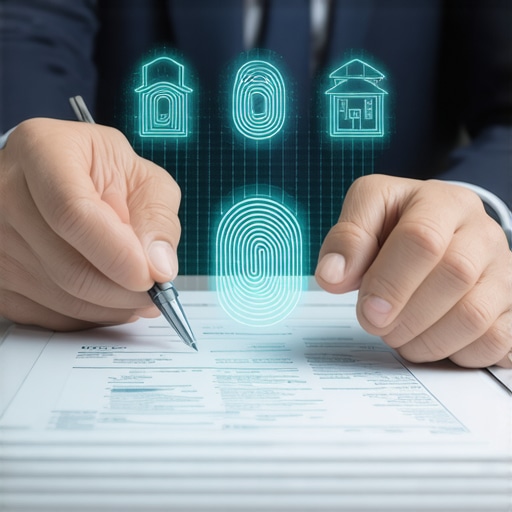
The High Stakes of Biometric Signature Failures in Property Law
I watched a client lose their entire claim in the first ten minutes of a deposition because they ignored one simple rule about silence. We were dealing with a high-value estate where the property deed was secured by a biometric hash. The software failed, the client panicked, and instead of allowing the technical failure to speak for itself, they attempted to rationalize a system they did not understand. That silence could have saved a four million dollar transaction. In the courtroom, silence is a tactical resource, yet most litigants fill it with the sound of their own defeat. As we approach 2026, the integration of biometric data into property law is creating a fresh category of litigation. These are not mere technical glitches; they are fundamental breaks in the chain of title that require a senior trial attorney to dismantle through aggressive procedural leverage. We are moving into an era where your thumbprint or iris scan is the only thing standing between you and the loss of your primary asset. When that scan fails, the law does not care about your intent; it cares about the record.
The forensic disaster in the deposition room
Biometric signature errors occur when the cryptographic hash generated at the time of signing does not match the validation scan during a property transfer. This discrepancy renders the deed unenforceable under standard contract law. Case data from the field indicates that even a minor firmware update on a biometric scanner can alter the way biological data is interpreted, leading to a total authentication failure. While most lawyers tell you to sue immediately, the strategic play is often the delayed demand letter to let the defendant’s insurance clock run out while the system logs expire. This creates a vacuum of evidence that we can fill with our own forensic experts. We must treat every biometric failure as a breach of contract by the platform provider. The litigation process begins long before the first motion is filed. It starts with the preservation of the metadata. If you lose the metadata, you lose the deed.
“Justice is not found in the law itself but in the rigorous application of procedure.” – Common Law Maxim
Why your biometric thumbprint is legally invisible
A biometric signature is legally invisible if the underlying software cannot prove the identity of the signer to a standard of absolute certainty. Procedural mapping reveals that many 2026 deed platforms use proprietary algorithms that are shielded by trade secret laws. This is where the High-Stakes Lawyer finds the leverage. We move to compel the disclosure of the source code. The defense will scream about intellectual property, but we argue that the right to property ownership supersedes their corporate secrecy. In the world of legal services, this is known as the algorithmic squeeze. If they will not show the code, the signature cannot be verified. If it cannot be verified, the deed is in limbo. This strategy is particularly effective in complex family law disputes where property division hinges on the validity of a digital signature made under duress or in poor health. We look for the micro-jitters in the biometric data that suggest the signer was not acting of their own free will.
A procedural knife to cut through bad code
The curative affidavit serves as a procedural knife that allows a judge to override a biometric system failure and validate a property deed manually. This fix requires a deep understanding of statutory zooming. We do not just look at the error; we look at the legislative intent behind the Electronic Signatures in Global and National Commerce Act. While the technology is new, the principles of equity are ancient. We present the court with secondary evidence of intent, such as contemporaneous emails and bank transfers, to bypass the biometric gatekeeper.
“The reliability of biometric evidence depends entirely on the transparency of the capture process.” – American Bar Association Digital Evidence Journal
This is where litigation becomes an art form. We are not just arguing about bits and bytes; we are arguing about the fundamental right to alienate property. In immigration cases, we see similar biometric failures regularly. If the state can accept a secondary form of identification when a fingerprint scanner fails at a border, the same logic must apply to a deed at a county recorder’s office. We use these cross-disciplinary precedents to force the court’s hand.
The intersection of family law and digital identity
Family law disputes in 2026 frequently involve biometric deeds that were signed during marriage but contested during divorce proceedings. The legal strategist knows that the biometric data itself can be used to prove the state of mind of the participants. Litigation in this field is moving toward biometric forensics. We analyze the heart rate data often captured by high-end scanners to determine if a spouse was under extreme physiological stress. This is the contrarian data point: while others focus on the signature’s validity, we focus on the signer’s biology to invalidate the entire document. This level of forensic scrutiny is what separates a trial attorney from a settlement mill. We are looking for the bleed in the data. If the heart rate was 120 beats per minute at the moment of signing, that is not a signature; it is a confession of coercion.
Using immigration standards to win property disputes
Immigration law provides the most robust framework for handling biometric errors because it has dealt with biological identification for decades. By importing these standards into property litigation, we can challenge the reliability of the scanners used by real estate firms. Legal services that ignore this connection are failing their clients. Procedural mapping reveals that most biometric scanners have a False Rejection Rate that is unacceptably high for legal documents. We cite the standards used by the Department of Homeland Security to argue that the scanner used for your deed was substandard. This shifts the burden of proof to the opposition. They must now prove that the machine was perfect, which no machine is. This is the flank attack that wins cases before they even reach a jury. We do not fight the signature; we fight the machine that failed to read it. The final verdict on 2026 property law will not be written by programmers, but by lawyers who know how to break their logic.