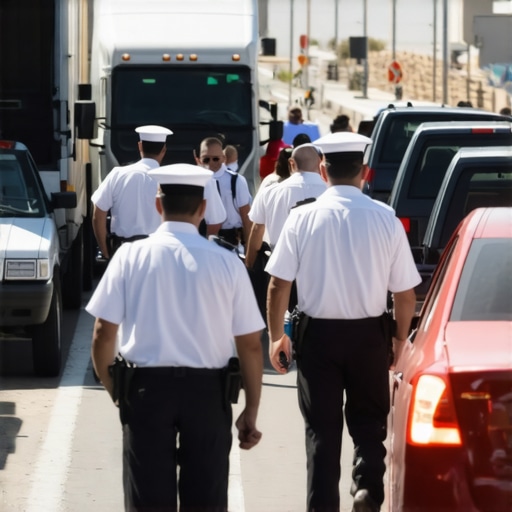
Sit down and listen because your travel plans are likely built on a foundation of sand. I smell the stale, burnt aroma of black coffee on my desk, and I see another client whose visa was revoked at the gate because they thought a passport was enough. It was not. In the legal world, especially regarding immigration and the evolving 2026 border protocols, the difference between entry and a five-year ban is often found in the quality of your paper trail. If you think the officer at the booth is there to help you, you have already lost the game. They are there to find a reason to exclude you based on procedural technicalities. I recently spent 14 hours deconstructing a contract that was designed to be unreadable, only to find the one clause that changed everything for a family facing deportation. That same level of microscopic scrutiny is now being applied to every traveler at the port of entry. Most travelers fail because they lack the foresight to treat their entry as a litigation event. This is not a vacation; it is a legal proceeding where you are the primary witness.
The hidden failure of standard travel papers
Travelers must carry a verified affidavit of intent, a certified family status decree, and a digital evidence log to bypass 2026 port of entry delays. These documents address specific 214(b) and 212(a)(4) inadmissibility triggers that are now being prioritized by Customs and Border Protection officers. Most legal services provide a basic checklist, but they fail to account for the aggressive nature of current litigation in immigration courts. You are walking into a trap if you rely on the same documents your grandfather used. The procedural landscape has shifted toward a presumption of immigrant intent for almost every non-immigrant visa category.
“Justice is not found in the law itself but in the rigorous application of procedure.” – Common Law Maxim
This maxim holds the weight of the world at the border. If you cannot provide a documented answer within the first sixty seconds of an interview, the officer has the discretion to initiate expedited removal. The logic of the system is simple: if it is not on paper, it does not exist.
The verified affidavit of financial standing
The verified affidavit of financial standing is a notarized document proving the traveler possesses immediate liquid assets to cover their entire stay without seeking local employment. This document prevents the dreaded public charge denial under the revised 2026 entry protocols which now require liquid proof. While most lawyers tell you to carry a simple bank statement, the strategic play is a formal affidavit from a CPA or legal representative that correlates your assets with the specific costs of your itinerary. This leaves no room for the officer to perform their own napkin math. The procedural reality of discovery in immigration cases shows that officers often look for any ambiguity to justify a secondary inspection. By presenting a verified affidavit, you are effectively closing the door on the public charge argument before the officer can even open it. This document should detail not just the balance but the source of funds, ensuring that there is no suspicion of illicit activity or money laundering.
Why immigration litigation starts at the primary inspection booth
Every interaction with a border officer is a recorded statement that can and will be used against you in future immigration litigation or family law proceedings. The primary inspection booth is the de facto courtroom where the burden of proof rests entirely on the traveler. If you stumble over your words or provide conflicting information, you are creating a record that is nearly impossible to purge. Litigation is about the preservation of evidence. If you enter the country on a tourist visa but carry a resume, you have just provided the government with the only evidence they need to charge you with fraud. You must understand that the border is a zone where standard constitutional protections are attenuated.
“Due process is the primary check on the exercise of arbitrary power.” – American Bar Association Standing Committee on Law and National Security
Without the right documents, your due process rights are a hollow shell. Information gain from the field suggests that officers are currently using social media scraping tools to find inconsistencies in your story. A contrarian data point you should consider: while most people think a letter from an employer is helpful, a letter of invitation from a legal entity that assumes liability for your return is far more powerful in the eyes of the law.
The certified family court decree for minors
A certified family court decree or a notarized parental consent form is mandatory for any minor traveling without both legal guardians to avoid human trafficking red flags. This document must satisfy the specific jurisdictional requirements of both the departing and receiving countries to ensure validity. Family law often intersects with immigration in ways that catch parents off guard. If you are in the middle of a custody battle and you try to cross the border without a specific court order allowing international travel, you are not just risking a delay; you are risking a felony charge of international parental child abduction. The paperwork must be impeccable. It must contain the specific dates of travel, the address of the stay, and the contact information of both parents. This is not a suggestion. It is a procedural requirement that, if ignored, results in the immediate detention of the minor and the traveler. I have seen cases where a simple lack of a seal on a document led to a three-day administrative hold in a facility that no one would describe as comfortable.
The admissible digital evidence log
An admissible digital evidence log consists of a curated physical printout of your digital footprint, including return flight confirmations, hotel bookings, and professional ties to your home country. This pre-emptively satisfies the officer’s curiosity regarding your digital devices and intent. In 2026, the border search of electronic devices is a standard procedural hurdle. If you provide a physical log of your itinerary and ties to your home country, you reduce the likelihood of a deep dive into your personal messages and emails. This is about managing the scope of the search. The tactical timing of presenting this log can shift the officer’s focus from suspicion to compliance. The logistics of the port of entry are designed to process volume, not truth. If you provide a path of least resistance through organized, admissible evidence, you will be processed. If you provide friction through lack of preparation, you will be scrutinized. The legal reality is that your entry is a privilege that can be revoked for the slightest procedural error. You are not there to argue the law; you are there to provide the evidence that satisfies the law’s requirements. Stop treating your travel as a casual event and start treating it as a high-stakes litigation maneuver. If you do not have these three documents, you are not prepared, and you are inviting the government to dismantle your plans.