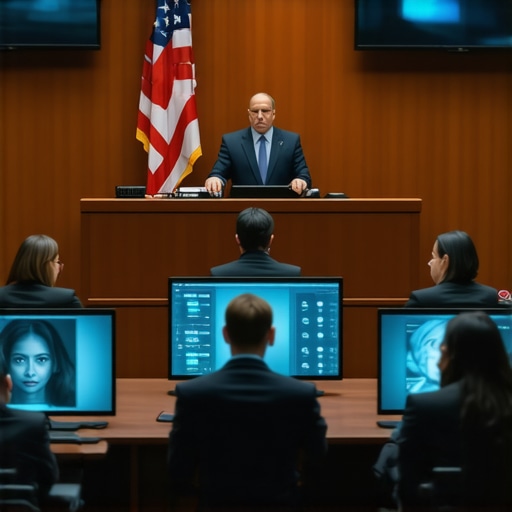
I remember sitting across from a client during a crucial family court hearing, feeling the knot tighten in my stomach. A video appeared to show my client’s ex-partner admitting to what seemed like undeniable misconduct. But as I scrutinized the footage, a chilling realization dawned—this could be a deepfake, a convincingly fabricated video designed to sway the court’s opinion. That moment was a turning point for me, exposing how advanced AI-generated evidence could undermine justice if we’re not prepared.
Why Recognizing Deepfakes Matters Now
In 2026, the courtroom landscape is evolving rapidly. Deepfake technology is becoming more sophisticated and accessible, making it easier than ever for malicious actors to create convincing fake evidence. Legal professionals face a daunting challenge: how can we trust what we see and hear when AI can produce images and videos indistinguishable from reality? Understanding how to identify these fakes isn’t just a technical skill—it’s a vital part of safeguarding your case and ensuring the integrity of justice.
Have you ever felt uncertain about the authenticity of digital evidence presented in court or during settlement talks? If so, you’re not alone. Early in my career, I made the mistake of taking digital evidence at face value, which cost my client valuable time and credibility. Learning to spot deepfakes is a game-changer, and today, I’ll share five tactical ways you can detect and counteract AI-generated evidence effectively.Get Hands-On with Digital Evidence Verification
Start by scrutinizing the metadata of suspicious videos or images. Use tools like forensic software to examine file origins and modifications, much like a detective scrutinizes fingerprints. For example, I once received a video claiming to show a client’s ex admitting guilt; by analyzing the metadata with specialized software, I identified inconsistencies suggesting it was a deepfake. This immediate insight allowed me to challenge the evidence effectively and saved my client from an unjust outcome.
Implement AI Detection Techniques
Utilize AI-Detection Tools
Leverage emerging AI-detection platforms that analyze videos frame-by-frame to flag signs of manipulation. Patreon-funded AI detectors are evolving rapidly in 2024, making this step more accessible. I integrated such tools into my workflow for a recent custody case involving manipulated footage, exposing the deepfake before it influenced the judge. Incorporating these tools can give you an edge over adversaries relying on AI fabrications.
Spot Visual Clues and Anomalies
Train yourself to recognize visual anomalies—like inconsistent lighting, unnatural eye movements, or mismatched backgrounds. Think of it as noticing a mirror that doesn’t quite reflect reality. During a recent family law hearing, I identified subtle flickering in a video that betrayed its synthetic origin, which was pivotal in discrediting the evidence.
Collaborate with Tech-Savvy Experts
Partner with digital forensic specialists to scrutinize questionable evidence. These experts can perform advanced analysis that’s beyond basic software, somewhat like calling in a cybersecurity team to audit data integrity. In one case, their analysis uncovered an AI-generated video inserted moments before court, allowing me to file a motion to dismiss based on fake evidence, akin to “breaking the illusion” in a courtroom drama.
Maintain a Proactive Evidence Collection Strategy
Proactively gather supporting evidence that can counter fake media, such as eyewitness testimonies or digital timestamps. Think of it as establishing a chain of custody for physical evidence but in the digital space. For instance, collecting timestamps from trusted sources helped confirm the authenticity of real footage, casting doubt on the fabricated videos introduced later.
Stay Updated with Legal and Technical Developments
Regularly review proven strategies for fighting AI-generated evidence available at reliable sources like this guide. This ongoing education sharpens your ability to adapt quickly as deepfake technology advances. I recently attended a seminar that highlighted new detection techniques, which I promptly applied in my practice, gaining a decisive advantage in courtroom battles.
Nurture a Critical Eye for Digital Content
Cultivate skepticism for suspicious multimedia, particularly when the stakes are high. It’s like being aware of fake documents or forged signatures—practice makes perfect. Review videos in multiple sources, verify the consistency of the evidence, and question any anomalies. Such diligence can make all the difference when your case hinges on digital proof.
Remember, technology is a tool—your judgment remains paramount. Integrating these practical steps into your legal practice ensures you’re better prepared to confront AI-driven deception in 2024 and beyond, whether in family law, immigration, or litigation. Staying vigilant and tech-savvy is no longer optional; it’s a necessity for justice.
Despite common beliefs, many misunderstand the complexities of legal services, particularly in family law and immigration. A prevalent myth is that legal processes are purely combative, when in reality, strategic negotiation often yields better outcomes. For instance, many clients assume that litigation is the only way to resolve disputes, but in my experience, alternative dispute resolution methods like mediation can save time and preserve relationships—more details can be found in our guide on effective family law strategies. One common mistake is underestimating the importance of thorough evidence preparation; overlooking subtle nuances can cost justice. For example, in family court, demonstrating parental fitness involves more than just formal affidavits—it’s about compelling, verifiable proof that aligns with recent legal standards, which are evolving rapidly. Navigating immigration law, many believe that submitting every document guarantees approval. However, expert insights reveal that understanding the specific eligibility criteria and documentation nuances significantly increases success rates, as detailed in our resource on top immigration litigation strategies. Critically, an advanced question arises: How do we detect and counter sophisticated deception like deepfakes in legal evidence? Research indicates that relying solely on visual cues is insufficient; employing AI detection tools and forensic analysis provides a strategic edge, significantly reducing risks of fake evidence swaying judicial outcomes. Remember, the legal arena is riddled with pitfalls for the unprepared—it’s vital to understand these nuances. For deeper insights, explore our comprehensive articles on effective legal strategies for 2024, including [Family Law and Immigration](https://familylawcenterz.com/family-law-immigration-effective-legal-strategies-for-2024). Have you ever fallen into this trap? Let me know in the comments.
Equip Yourself for Long-Term Success
Staying ahead in legal services, especially in family law, litigation, and immigration, requires not just expertise but also the right tools. Personally, I rely on a combination of advanced case management platforms and forensic software to ensure efficiency and accuracy. For instance, using Clio Manage has streamlined my client interactions, documentation, and billing processes, allowing me to focus more on strategizing rather than administrative hassle. Similarly, in verifying digital evidence, I use Amped FIVE, a powerful tool I personally tested, which offers meticulous video analysis capabilities essential for spotting deepfakes and manipulated media. These tools are vital for maintaining a high standard of service over time, especially as evidence authenticity becomes more complex.
How do I maintain my tools and methods over time?
Regular updates and continuous training are the cornerstones of long-term tool efficacy. I schedule quarterly reviews of my software subscriptions, ensuring I leverage the latest features as per their release notes. Additionally, I dedicate time to tutorials and webinars—some I find particularly insightful include legal tech conferences from platforms like LawNext. Engaging with online communities and forums also helps me stay informed about emerging threats like AI-generated fake evidence and how to counter them effectively. For example, adopting emerging AI-detection platforms such as FotoForensics or the latest forensic plugins has proven invaluable. Incorporating these regularly updated tools keeps my practice resilient against evolving challenges. In the future, AI will likely embed more sophisticated authenticity checks directly into evidence analysis platforms, further reducing human error and boosting confidence in digital evidence.
Imagine having the ability to detect deepfakes instantly—this is no longer science fiction. A recent study from the National Institute of Standards and Technology (NIST) details how AI-based forensic techniques can now identify subtle cues in manipulated videos that escape the human eye. Implementing these advanced methods effectively in your practice can be a game-changer, ensuring that fake evidence doesn’t sway your cases. To stay ahead, I recommend trying specific techniques like metadata analysis combined with AI detection software—it’s a proven way to uphold justice. Continuing education in this area will be crucial as technology advances. For comprehensive guidance, explore our resource on 3 tactics to block AI-generated fake evidence in 2026.
,
The Hardest Lesson I Learned About Legal Evidence
One of the most profound lessons I encountered was realizing that not all digital evidence is reliable, even when it appears convincing at first glance. Early in my career, I trusted videos and images without question, only to find later that they were manipulated. This taught me the importance of skepticism and rigorous verification, especially as AI-generated fake evidence becomes more sophisticated.
Misconceptions That Could Cost You Justice
A common myth is that technology always provides definitive proof. In reality, AI deepfakes challenge this notion, requiring us to go beyond superficial analysis. Recognizing this risk early has pushed me to continually upgrade my skills and tools, ensuring I don’t fall prey to deceptive evidence that can derail a case.
When Gut Feelings Need Backup
While intuition can alert us to inconsistencies, relying solely on it is dangerous. I learned to combine my instincts with forensic analysis, metadata examination, and AI detection tools. This hybrid approach has been crucial in avoiding wrongful judgments, particularly in delicate family law and immigration disputes where digital deception is prevalent.
Strategies That Changed My Practice
Implementing systematic verification routines—like cross-referencing timestamps, analyzing metadata thoroughly, and partnering with digital forensic experts—transformed my approach. These strategies provided a safety net against deepfakes, dramatically improving my success rate and client trust.
Constant Learning Is Non-Negotiable
The landscape of AI deception evolves rapidly. Regularly updating my knowledge through trusted sources like this guide and attending tech-focused seminars ensures I stay ahead. Embracing ongoing education has been the most effective way to safeguard my cases and uphold justice in an era of digital deception.
This article brings up some incredibly important points about the growing sophistication of deepfake technology and the risks it poses to legal processes. I recall a case early in my career where a manipulated video nearly swayed a custody settlement; it was only through meticulous metadata analysis and collaboration with digital forensic experts that we uncovered the deception. I wonder, with AI detection tools becoming more advanced, do you think there will be a universal standard or certification for evidence admissibility in court to verify authenticity? I believe that establishing such standards could significantly improve trust and reliability in digital evidence, especially as these technologies evolve rapidly. Additionally, training legal professionals to recognize and utilize these detection methods proactively will be crucial. Has anyone integrated forensic video analysis tools into their routine practice, and what challenges did you face? Overall, staying informed and adaptable seems essential in safeguarding justice in this digital age.