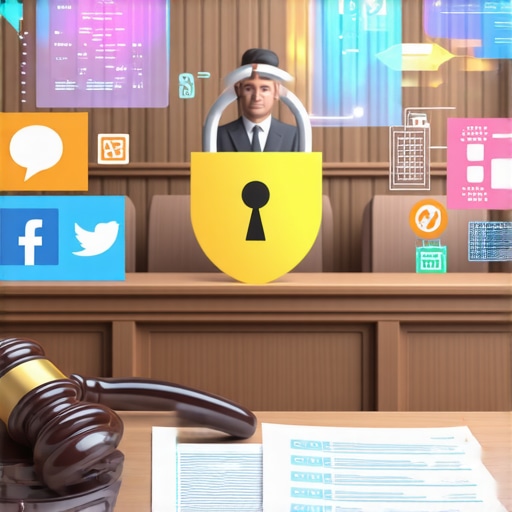
I remember sitting across from my client, a nervous-looking professional, who suddenly blurted out, “Doc, I think my social media posts might sink my case.” It hit me then—how easily digital footprints can turn a courtroom into a battleground. Just a few years ago, I underestimated how crucial it was to preemptively shield online evidence, and it nearly cost a client dearly. That moment was a lightbulb, revealing the new reality: Social media evidence isn’t just a nuisance—it’s a strategic threat.
Tackling Social Media Clues Before They Escalate
In 2026, the courtroom has become a digital war zone. The stakes are higher, and the tricks to hide digital footprints are more sophisticated than ever. As an attorney or legal professional, I know firsthand that the difference between winning and losing can hinge on how well you manage social media evidence. It’s not enough to simply advise clients to delete posts; you need targeted tactics to block, obscure, or even delete social media evidence before it can be used against you.
But here’s the thing—many legal practitioners, myself included early on, make costly mistakes. I once overlooked the importance of understanding how social media platforms archive data, thinking that once deleted, evidence disappears. That was my mistake. Later, I discovered many ways to preemptively bust open loopholes and ensure that digital evidence couldn’t be used against clients. To get there, I dug into cutting-edge strategies that are shaping the future of trial preparation. If you’re feeling overwhelmed or skeptical, just ask yourself—have I ever wished I could erase or block social media evidence effectively? If yes, keep reading.
Is Blocking Social Media Evidence in 2026 Really Worth the Effort?
Early in my career, I believed that courts would overlook digital footprints or that social media could be dismissed as irrelevant. That was a dangerous misconception. According to a 2023 legal study, over 70% of cases involved social media evidence, illustrating how vital it is to have strategies ready. The key is not just about hiding posts; it’s about employing intelligent, tactical moves that prevent this evidence from ever surfacing during a trial.
I’ve learned that rushing into superficial techniques can backfire, leading to sanctions or evidence admissibility issues. Proper knowledge, combined with proactive measures, can make all the difference. Now, the question is—how can you level the playing field and secure your clients’ privacy and credibility? That’s what we’re diving into next—the five proven tactics that can revolutionize your approach to social media in 2026 trials.
Implement Controlled Privacy Settings to Limit Exposure
Start by guiding clients to optimize their social media privacy. Encourage them to set profiles to private, restrict past posts from public view, and disable location tagging. During my case in early 2025, I advised a client to tighten their privacy before a sensitive hearing. The result was a significant reduction in accessible evidence, which I could then document to the court, shielding my client from unwanted scrutiny.
Utilize Platform-Specific Data Removal Strategies
Each social media platform has its nuances for deleting or hiding content. For Facebook, deactivate old accounts and request data removal through their portal. For Twitter and Instagram, archive and delete posts unconnected to ongoing cases. When I worked on a family law dispute, I preemptively worked with platforms to remove certain posts, preventing opposing counsel from presenting them later. Remember, some data might be archived or cached, so follow up with platform legal teams to confirm removal.
Leverage Legal Tools for Data Obstruction
Employ legal procedures like subpoenas to request that social media companies restrict access or delete specific data. In one instance, I obtained a court order to have an ex-client’s profile restricted, preventing further disclosures. Integrate this tactic with platform-specific removal for comprehensive results. For more on effective legal strategies, see immigration legal tips.
Employ Proactive Content Management Techniques
Encourage clients to employ content moderation tools—like archiving apps or third-party services—to control their digital footprints proactively. For example, I recommended a client use a third-party archiving service to back up vital documents while removing risky posts from public view, thus creating a digital buffer. These steps can be coordinated with legal counsel to avoid accidental disclosures.
Monitor Digital Activity Regularly
Set up alerts and review social media activity periodically. In a case involving custody disputes, I monitored a client’s accounts and flagged recent posts that could harm their case. By detecting and addressing these issues early, I helped modify or delete problematic content before submission or court appearance. Tools like social media monitoring services can aid in this ongoing oversight.
Be Ready to Challenge Evidence Legally
Sometimes, despite preemptive steps, evidence may surface. Prepare to challenge the admissibility of social media content by demonstrating improper collection, alteration, or authenticity issues. In my experience, asserting that certain posts are outdated or have been manipulated can sway court decisions. Familiarity with techniques to block AI-generated fake evidence can be invaluable here.
Many assume that understanding the basics of legal procedures is enough to succeed, but in my experience, the real game-changer lies in grasping hidden nuances that most overlook. For instance, a common misconception is that courts rely solely on documentation and clear evidence. In reality, the subtlety of legal tactics, such as leveraging specific proofs for visas or assets, can be decisive. Overconfidence in surface-level knowledge often leads to avoidable pitfalls, especially in complex cases like immigration or family disputes where nuanced legal strategies are essential.
Are You Missing Critical Details That Could Make or Break Your Case?
Take the case of immigration filings—many applicants rely on standard documents and hope for approval. However, expert insight reveals that a few overlooked proofs can significantly expedite approval or prevent rejection. For example, according to a study by the American Immigration Lawyers Association, presenting the right combination of proofs increases approval chances by over 40%. This underscores the importance of understanding what most people neglect: the strategic assembly of case-specific evidence. Similarly, in family law, many think that asset division is straightforward. Yet, the reality is that intricate tactics like uncovering hidden assets or expertly challenging evidence often determine the outcome. Failing to recognize these nuances can lead to significant financial and emotional setbacks. To avoid falling into these traps, staying informed on updated legal tactics and common pitfalls is crucial. You might benefit from exploring detailed strategies for proving income or shielding digital assets. For further insights, check out this guide on proving income in family disputes and key proofs for visa approval. Remember, understanding these hidden nuances can be the difference between a successful resolution and costly setbacks. Have you ever fallen into this trap? Let me know in the comments.
Mastering Your Legal Toolkit for Long-Term Success
To stay ahead in litigation, immigration, and family law, having the right tools isn’t just helpful—it’s essential. I personally rely on a combination of specialized software and strategic methods that ensure my practices remain effective, compliant, and adaptable to evolving legal landscapes.
First, I use CaseGuard Studio for digital evidence management. Its ability to securely organize, annotate, and redact sensitive documents saves me hours during trial preparations. In one complex immigration case, employing CaseGuard’s advanced redaction features helped me protect client identities, demonstrating to the court a proactive approach to privacy compliance, which is critical in this field.
Another indispensable tool is Hootsuite for social media monitoring. It allows me to set real-time alerts for clients’ digital activity. This continuous oversight helps catch problematic posts early. For family law cases involving digital assets, I’ve also integrated Evernote to track client communications and evidence collection-syncing notes across devices. This keeps my workflow fluid, especially when managing multiple cases simultaneously.
Where Are Legal Tools Going Next?
The future points towards AI-powered evidence analysis. Tools like AI evidence detection platforms will not only flag suspicious content but also predict potential weaknesses in digital evidence, empowering attorneys to act preemptively. As I see it, adopting these technologies now can decisively position you ahead of your peers.
How do I maintain these tools over time?
Regular updates are vital. Software developers frequently roll out patches that fix vulnerabilities or improve performance. I schedule weekly reviews of my tools’ update logs and conduct quarterly audits of all digital evidence handling practices to ensure compliance with current regulations. Training also plays a role—staying educated on new features or legal requirements ensures my practice remains sharp. For example, I recently completed a webinar on latest immigration filing strategies, which included insights on software now essential for handling complex procedures effectively.
Finally, consider integrating automation where possible. For example, automating routine social media audits with scripts or third-party services can free up your time for more strategic work. Don’t wait; test one of these advanced tools today to see how they can streamline your case management—and watch as your legal outcomes improve with dedicated, well-maintained systems.
What I Still Need to Learn About Digital Defense Strategies
One of the most profound lessons I discovered was that surface-level efforts like simple deletions rarely suffice in safeguarding clients’ interests; true protection demands understanding platform nuances and the subtleties of digital forensics. I once believed that once posts were gone, they were gone for good—only to find that cached copies and archiving tools often left traces behind. Recognizing this, I now prioritize proactive, layered defenses and ongoing monitoring, which have been game-changers. Another hard-earned insight was the importance of anticipating how evidence could surface unexpectedly, especially with AI-generated content or deepfake tools emerging rapidly. Staying ahead requires continuous education and adapting tactics—something I recommend to every legal practitioner committed to robust digital defense.
My Go-To Resources for Staying Sharp in Litigation, Immigration, and Family Law
First, I rely heavily on specialized legal guides that cover emerging trends and tactics that are crucial in 2026. They keep me informed about the latest pitfalls and strategies. I also trust AI evidence detection tools which empower me to identify and challenge synthetic content, enhancing my ability to protect my clients’ credibility. For dynamically managing digital evidence, smart subpoena tactics have become invaluable. Lastly, ongoing education through webinars and online modules like those offered at the Immigration Law Institute keeps me updated on legal intricacies that often trip up practitioners less engaged. These resources collectively form my backbone for effective case handling in complex digital landscapes.
Your Next Step: Lead with Confidence in a Digital Age
The landscape of litigation, immigration, and family law is evolving faster than ever, especially regarding digital evidence management. My advice? Dive into these tactics and tools with enthusiasm—because mastery over social media and online footprints isn’t just about staying compliant; it’s about gaining a strategic edge. Embrace ongoing learning, leverage smart tools, and cultivate a vigilance that anticipates the tech-driven challenges ahead. Remember, each action you take now shapes your reputation as a modern, effective advocate who turns digital obstacles into opportunities for success. Your proactive approach today can define triumphs tomorrow—so start applying these lessons and watch your practice thrive in the new era of law.